Gut health, explained
Your gut does far more than digest.
It is home to trillions of microbes. They feed on what you eat, and they are in constant conversation with your immune system. Here is what the research says, and what it does not.
What you are looking at Choose one to find it.
This page is general education about diet and the gut, with every source listed at the end. It is not medical advice, and it is not a claim about any Quas product.
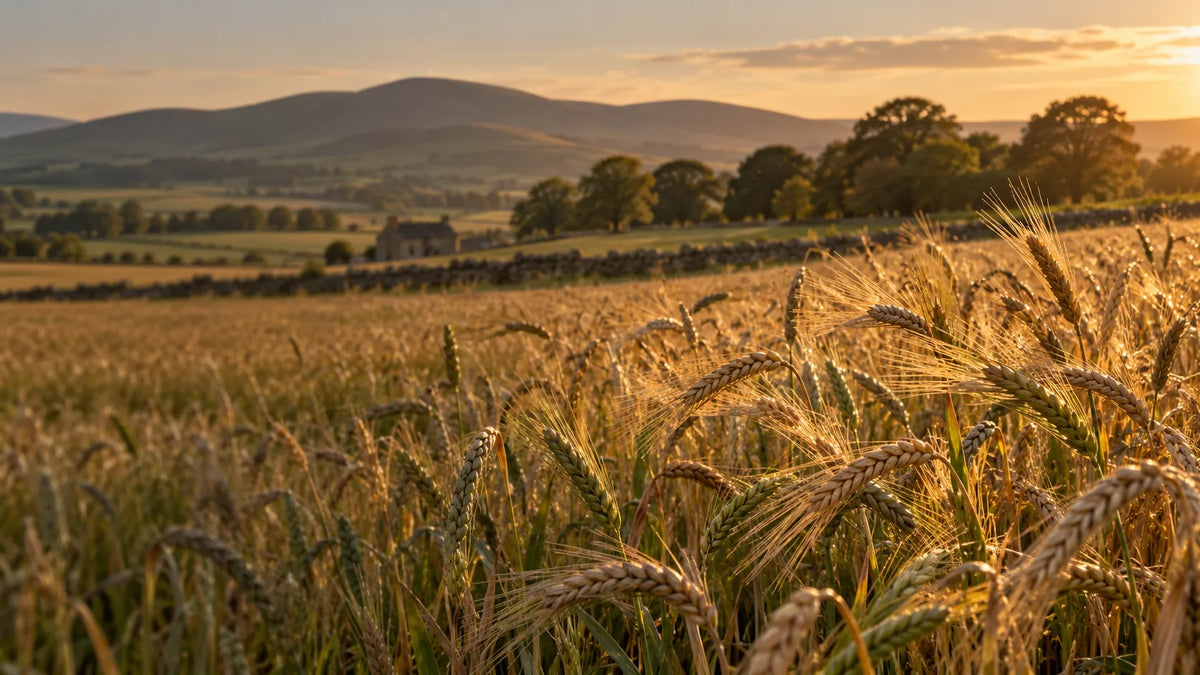
Where fibre comes from
Most plant foods carry fibre your own body cannot digest. Reference 1
Wholegrains, pulses, vegetables, fruit, nuts and seeds all contain it. What happens to it next is where your gut microbes come in.
What lives in your gut
Trillions of microbes, fed by what you eat.
Your gut is home to trillions of bacteria and other microbes. What you eat, and especially the parts your own body cannot digest, becomes their food. Reference 1
StomachFibre arrives largely intact.
Small intestineMost of your meal is absorbed here.
Large intestineHome to most of your gut microbes.
Gut wall, magnifiedFatty acids feed the lining cells.
-
Step 1 · Stomach
You eat fibre
It passes through your stomach largely intact. Your own digestive enzymes cannot break most fibre down. Reference 1
-
Step 2 · Small intestine
It passes through untouched
Your small intestine absorbs most of the rest of your meal. Most fibre travels on, largely undigested. Reference 1
-
Step 3 · Large intestine
Microbes ferment it
Most of your gut microbes live in the large intestine. There they break fibre down by fermenting it, using enzymes the human body does not make. Reference 1Reference 4
-
Step 4 · Gut wall, magnified
They make short chain fatty acids
Fermentation produces butyrate, propionate and acetate, a major energy source for the cells lining your gut. Reference 1
In short
Fibre is food for your gut microbes. Reference 1
Your own body cannot digest most fibre. Your gut microbes can, and what they make from it helps feed the cells lining your gut.
Your gut and your immune system
Your gut is a major centre of immune activity.
Every day, the gut meets food and microbes. Its immune cells help maintain this boundary, including plasma cells that make antibodies. Reference 3Reference 7
≈70%
How your gut and immune system are connected
-
Where the body meets the world
Every day the gut meets food, resident microbes and sometimes harmful ones, so it needs constant immune watch. Reference 3
-
Trained by microbes
Resident gut microbes help the immune system learn which bacteria to tolerate and which to fight. Reference 2
-
Felt beyond the gut
Researchers increasingly recognise that gut microbes also affect immunity elsewhere in the body. Reference 2
A 200,000 year diet, changed in 100
200,000 years of foraging. About 100 years of change.
For more than 200,000 years, most humans lived as foragers, eating large amounts of plant material. Processed food, antibiotics, modern sanitation and low fibre diets are recent arrivals by comparison. Reference 4

| Traditional lifestylesSuch as the Hadza foragers of Tanzania | Industrialised lifestylesSuch as Western countries | |
|---|---|---|
| Diet | Plenty of fibre rich plant foods | More processed food, far less fibre |
| Variety of gut microbes | Higher | Lower |
| Fibre digesting enzymes | A wider range | A narrower range |
| Seasonal change in gut microbes | Present | Absent |
These are comparisons between groups of people alive today, not with ancient humans. In one, people in the United States had about 75% of the bacterial diversity found in Amerindians living in Venezuela. Reference 4
A hypothesisNot yet settled
It is our opinion that aspects of our microbial identity have gone extinct and that this extinction results in a mismatch between our recently adapted microbiota and our more slowly adapting human genome.
The fibre gap
Only 4% of UK adults eat enough fibre.
Fibre is what gut microbes feed on, yet national survey data show that very few people in the UK reach the recommended amount. Reference 5
-
30g
Recommended fibre a day for adults in the UK Reference 5
-
14%
of children aged 4 to 10 eat enough fibre for their age Reference 5
4 in 100 UK adults eat the recommended 30g of fibre a day
The Stanford diet study
What changed with more fibre and fermented foods.
A Stanford team asked healthy adults to change their diet for ten weeks. One group ate more fermented foods, the other more fibre, and the researchers tracked their gut microbes and immune markers throughout. Reference 6
The study at a glance
- Who took part
- 36 healthy adults
- Diet period
- 10 weeks
- Design
- Randomised into two groups
- Where
- Stanford University, 2021

Group one
More fermented foods
Yoghurt, kefir, fermented cottage cheese, fermented vegetables, vegetable brine drinks and kombucha.
Servings of fermented food a day, on average What changed
- The variety of gut microbes rose steadily over the diet.
- 19 of 93 blood proteins in an inflammation panel went down, including one called IL-6. Reference 6
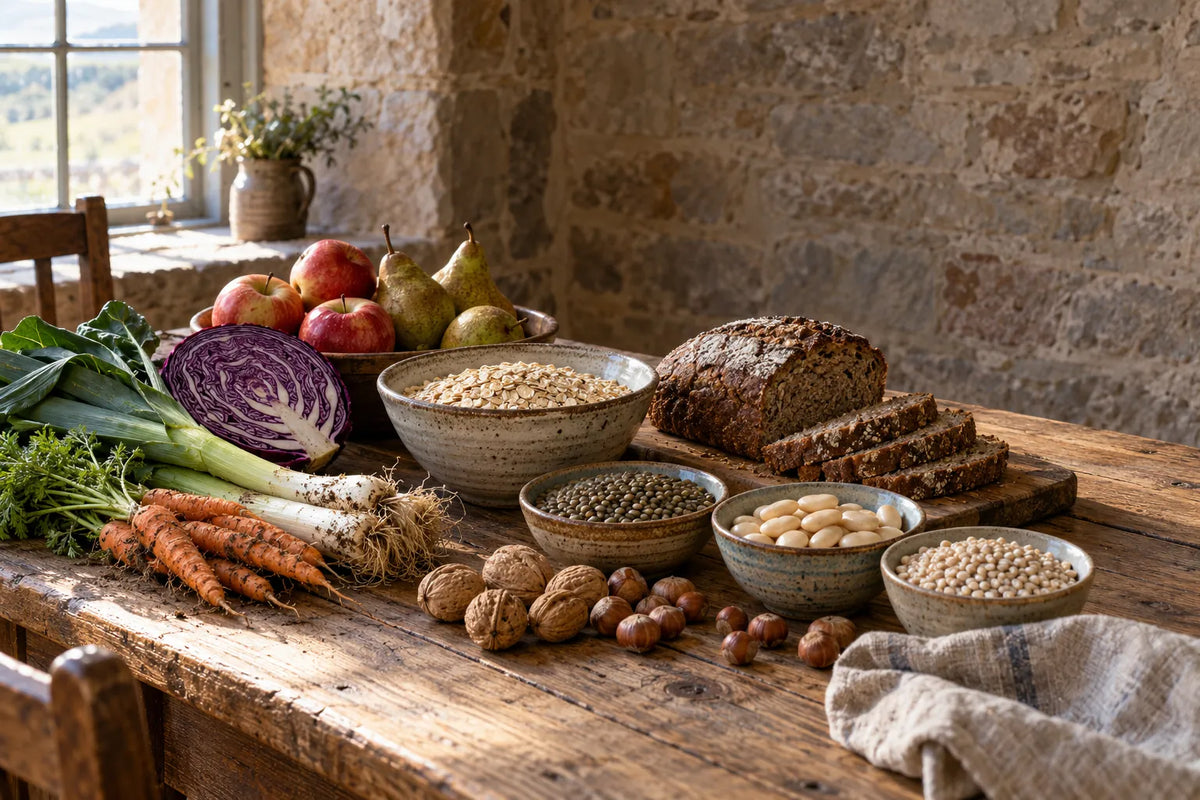
Group two
More fibre
Fruit, vegetables, legumes, whole grains, nuts and seeds.
Grams of fibre a day, on average What changed
- Genes for enzymes that break down plant carbohydrates became more abundant in the gut microbiome.
- Immune responses varied between people, with different patterns linked to their starting gut microbes.
- The variety of gut microbes stayed about the same over the ten weeks. Reference 6
-
What it shows
- Changing your diet can shift your gut microbes and some immune markers within weeks.
- Each diet produced a different pattern of microbial and immune changes.
-
What it does not show
- The main planned measure, immune-cell responses to lab stimulation, did not significantly change in either group.
- It was small and short: 36 people over 10 weeks. Larger studies are needed.
- It tested whole diets, not any single food or drink, and that includes Quas.

Where Quas fits
A fermented drink that is high in fibre.
Nothing above is a claim about Quas. The research looks at whole diets, not any single food or drink. What we can say is simple: only 4% of UK adults meet the recommended 30g of fibre a day, and Quas is high in fibre, with 6.7g per can. Reference 5
LIVE Keep in the fridge
-
6.7g High in fibre
6.7g of fibre in every can, from chicory inulin.
-
Low in sugar
2.5g of sugar or less per 100ml.
-
180 year old Sourdough starter
Every batch is fermented with a sourdough starter kept alive for 180 years.
-
Over 500 Billion live cultures
In every can of Live Quas, lab verified.
Quas is made from rye and barley and contains gluten. Live Quas contains live cultures and is kept in the fridge.
Sources
References.
Every numbered citation on this page links here. We chose peer reviewed papers and national survey data, and we say what kind of evidence each one is.
This page is general education, not medical advice. If you have questions about your diet or digestion, speak to your GP or a registered dietitian.
-
Read the paper (opens in a new tab)
Review
Reference 1: Influence of diet on the gut microbiome and implications for human health
How gut microbes ferment fibre and make short chain fatty acids.
-
Read the paper (opens in a new tab)
Review
Reference 2: The interplay between the gut microbiome and the immune system in the context of infectious diseases throughout life and the role of nutrition in optimizing treatment strategies
How gut microbes interact with the local and wider immune system.
-
Read the paper (opens in a new tab)
Review
Reference 3: Allergy and the gastrointestinal system
The gut as the main contact point with the outside world, and the size of its immune tissue.
-
Read the paper (opens in a new tab)
Opinion article
Reference 4: The ancestral and industrialized gut microbiota and implications for human health
The foraging timeline, the lifestyle comparison and the mismatch hypothesis.
-
Report
Reference 5: Dietary Fibre in 2026: An Update on Barriers and Opportunities to Fill the UK Fibre Gap
The 30g recommendation and the share of UK adults and children who meet it.
-
Read the paper (opens in a new tab)
Randomised study
Reference 6: Gut-microbiota-targeted diets modulate human immune status
The ten week fermented food and fibre study on this page.
-
Read the paper (opens in a new tab)
Quantitative analysis
Reference 7: The total mass, number, and distribution of immune cells in the human body
The estimated share of antibody-producing plasma cells found in the gut.