The science inside the sourdough.
Quas starts with Scottish water, rye, barley and a 180-year-old sourdough starter. Fermentation builds the tang, the toasted grain and the dry finish. Then we measure what the culture leaves in the can, so we can explain it honestly.
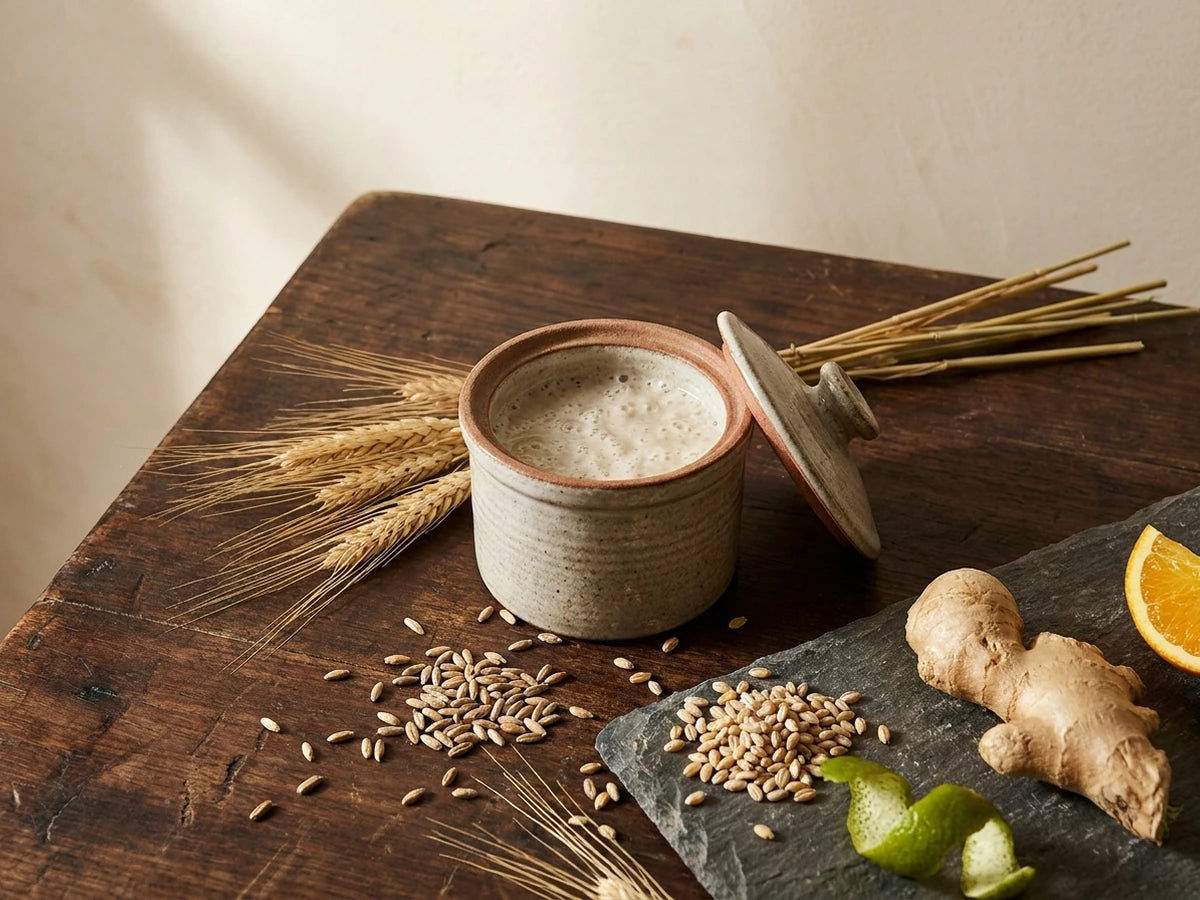
A 180-year-old culture, still at work.
Every batch of Quas begins with the same sourdough starter, fed and kept going for 180 years. It is a living community of more than 100 unique strains of bacteria and yeasts.
Given rye, barley and time, the culture turns some of the grain sugars into gentle acidity, deep flavour and natural bubbles. That is where the tang and the dry finish come from.
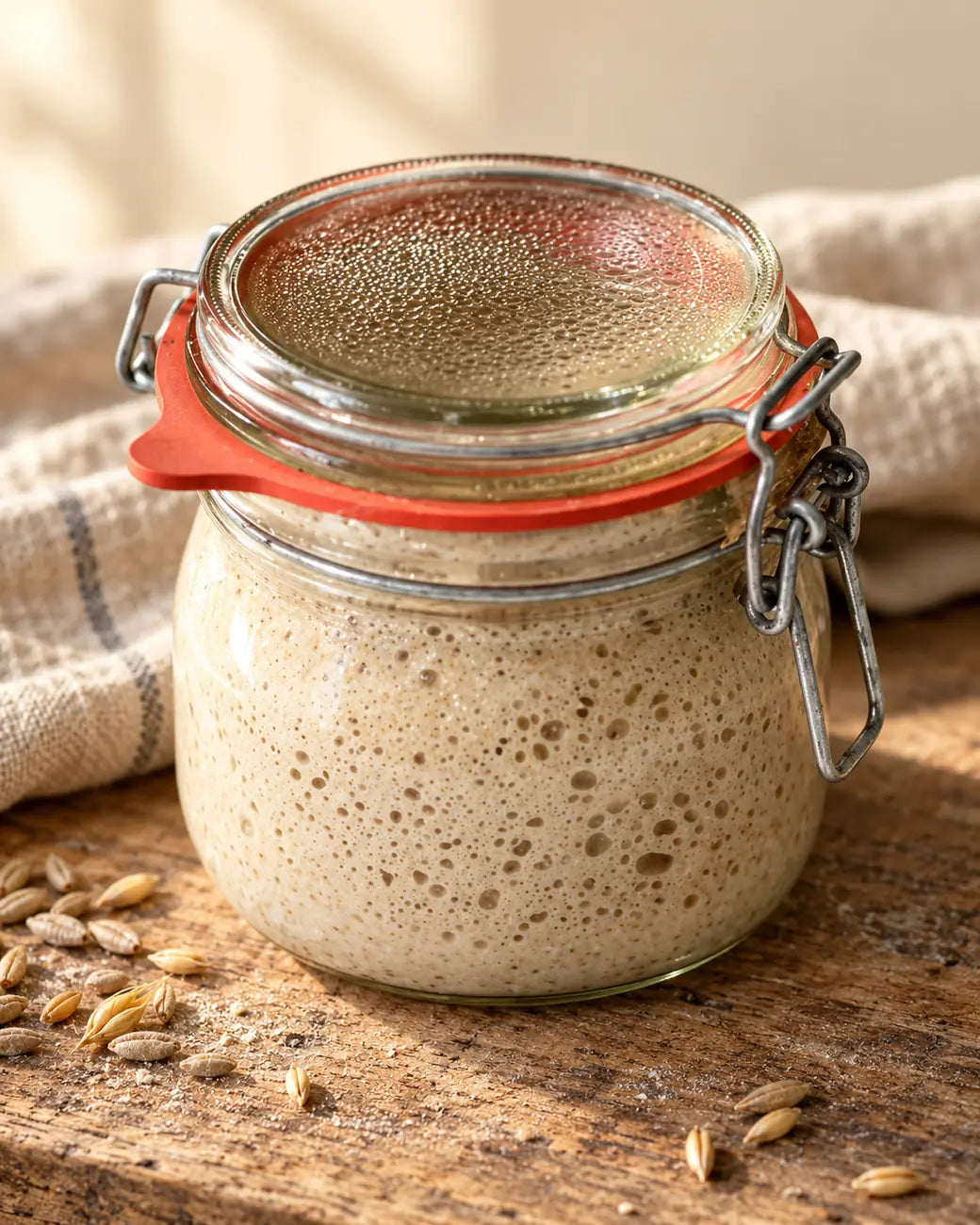
- Natural CO₂Bubbles made by the culture as it ferments.
Unfiltered by design.
Filtered kvass runs clear. Quas doesn't, because we don't filter it. Filtering removes cultures, so we leave them in, and the drink pours naturally cloudy with a gentle sediment that can settle in the can.
Cloudiness is a process fact, not a health claim, and on its own it doesn't prove a drink is live. For that, you have to count.
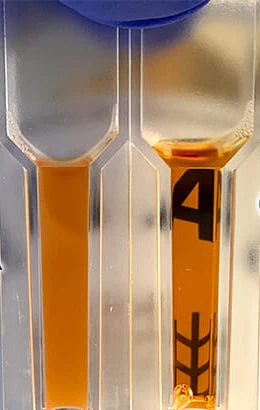
- Quas, unfilteredThe cultures stay in, so the label behind disappears.
- Filtered kvassClear enough to read the label behind it.
LIVE Keep it cold
2–6°CWhy Live Quas lives in the fridge.
Live Quas is unpasteurised, so its cultures stay active. The cold slows them down and keeps the flavour where it should be.
-
Chill it on arrival.
Unpack your box and put every can straight into the fridge. Live Quas must stay refrigerated at all times.
-
It keeps evolving.
The cultures stay active in the cold, so Quas slowly becomes more sour and less sweet with time.
-
Enjoy within six weeks.
Live Quas keeps for six weeks. Check the best-before date on the can.
How we count live cultures.
A live culture is too small to see, so the lab gives each viable cell the chance to grow into a colony you can see. Count the colonies, work back through the dilution, and you have the result in colony forming units, or CFU.
LIVE Live Quas only
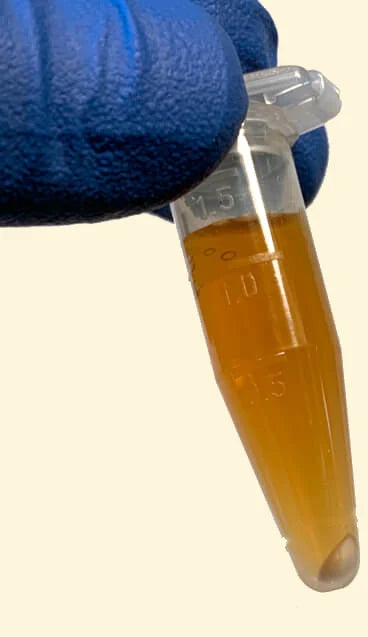
- The pelletCultures gathered from the drink.
See them together.
Spin a sample of Quas in a centrifuge and the cultures gather at the bottom of the tube as a pale pellet, visible without a microscope.
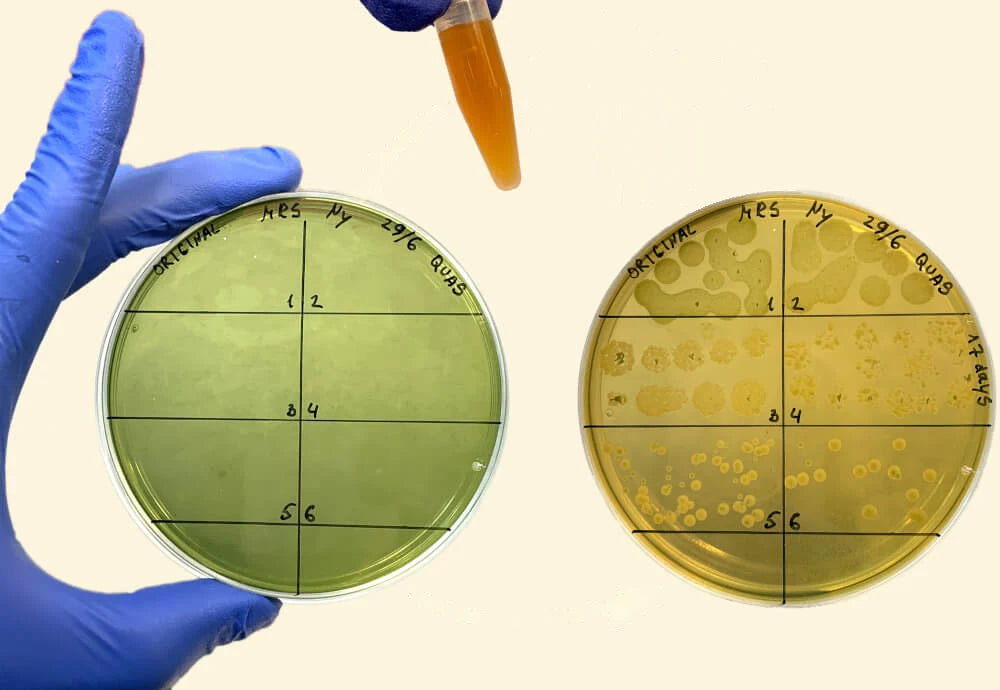
- Fresh growth mediumDroplets placed, nothing visible yet.
- After incubationColonies thin out as the dilution rises.
Give them room to grow.
Dilute the sample step by step and place droplets of each dilution on a growth medium. After incubation, each viable cell has grown into a colony.

- One colonyGrown from one viable cell.
- Too crowded to countSo we count a higher dilution.
Count what grew.
Where colonies sit apart, count them. Multiply by the dilution and the volume, and you have the number of live cultures in the drink.

The result
-
Over 500 Billion live cultures in every 330ml can.
Lab-verified across multiple batches of Live Quas.
-
Over 100 Types of cultures
Cultures and yeasts living together in our starter.
What the numbers do and don't say.
Quas is a craft drink backed by science, not a clinical supplement. Here is exactly what our measurements cover.
-
Live Quas only
Live cultures, per can.
Our count covers Live Quas, measured in the lab across multiple batches.
- Over 500 billion per 330ml can
- Counted as colony forming units
- Keep refrigerated at 2–6°C
-
Process fact
Cloudy is not proof.
Quas pours cloudy because it is unfiltered. A cloudy drink tells you how it was made, not whether it is live. Only a count can show that.
- Unfiltered, so it pours cloudy
- A gentle sediment can settle
- Only a count shows what is live
-
No health claims
A drink, not a supplement.
We share these numbers to explain how Quas is made, not to promise what it will do for you. Drink it because you like the taste.
- Made to be enjoyed
- No medical or health claims
- Questions answered in our FAQ
Taste is still the point.
All of this ends up in a cold can: dry, malty and gently tangy. Try it and let the flavour do the explaining.


