


LIVE Keep in the fridge at 2–6°C
Mixed Pack Quas
Original, Ginger and Mint & Lime. Build a box of two or all three.
£17.90 for a box of 5 cans
£3.58 per can
-
Order by 4pm, Monday to Thursday, for next-day delivery.
Shipping is included in the price. Sent by Royal Mail Tracked 24 or APC Overnight, with a tracking number by email.
-
If cans arrive damaged or leaking, or Live Quas is delayed by 5 days or more, we'll give you credit or a discount on your next order, or send a free replacement. A full refund is always the fallback.
Full terms -
Your first Taster 5 is covered.
Covers your first order when it's a Live Taster 5 with all three flavours.
We're confident you'll love at least one flavour. If none is for you, email us within 7 days of delivery for a 100% refund, including delivery. No questions asked.
Full terms
- Billion live cultures
- High in fibre
- Low in sugar
- Sourdough starter
Choose the mix
These are the mixes we pack for your flavours and box size.
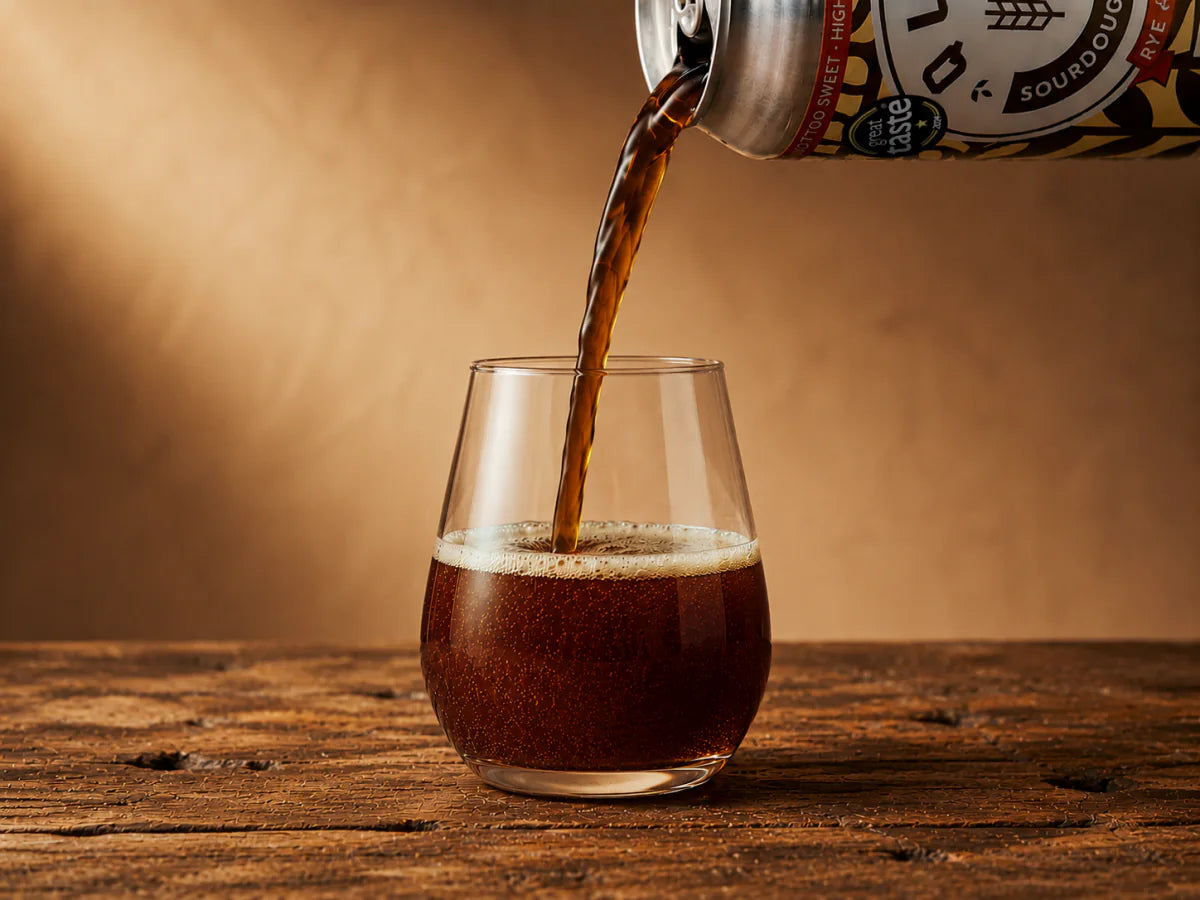
In the glass.
Three sourdough fermented flavours, each built on the same malty backbone.
-
 Great Taste 2024
Original
Great Taste 2024
Original
-
 Great Taste 2026
Ginger
Great Taste 2026
Ginger
-

Original
Malty and rich in dried fruit, with gentle spice and an ale-like feel. A clean sourness dries the palate, so it never drinks sweet.
-

Ginger
A malty base lifted by fresh ginger, with warm rye and barley and a bright, clean tartness.
-

Mint & Lime
Fresh lime and a gentle mint freshness over malty grain depth.
Serve fridge-cold and straight, in a stemless tulip glass. No ice.
Fermented with a 180-year-old sourdough culture.
Quas starts with Scottish water, rye and barley. The culture does the slow work, and we leave it in the can.
The science of kvass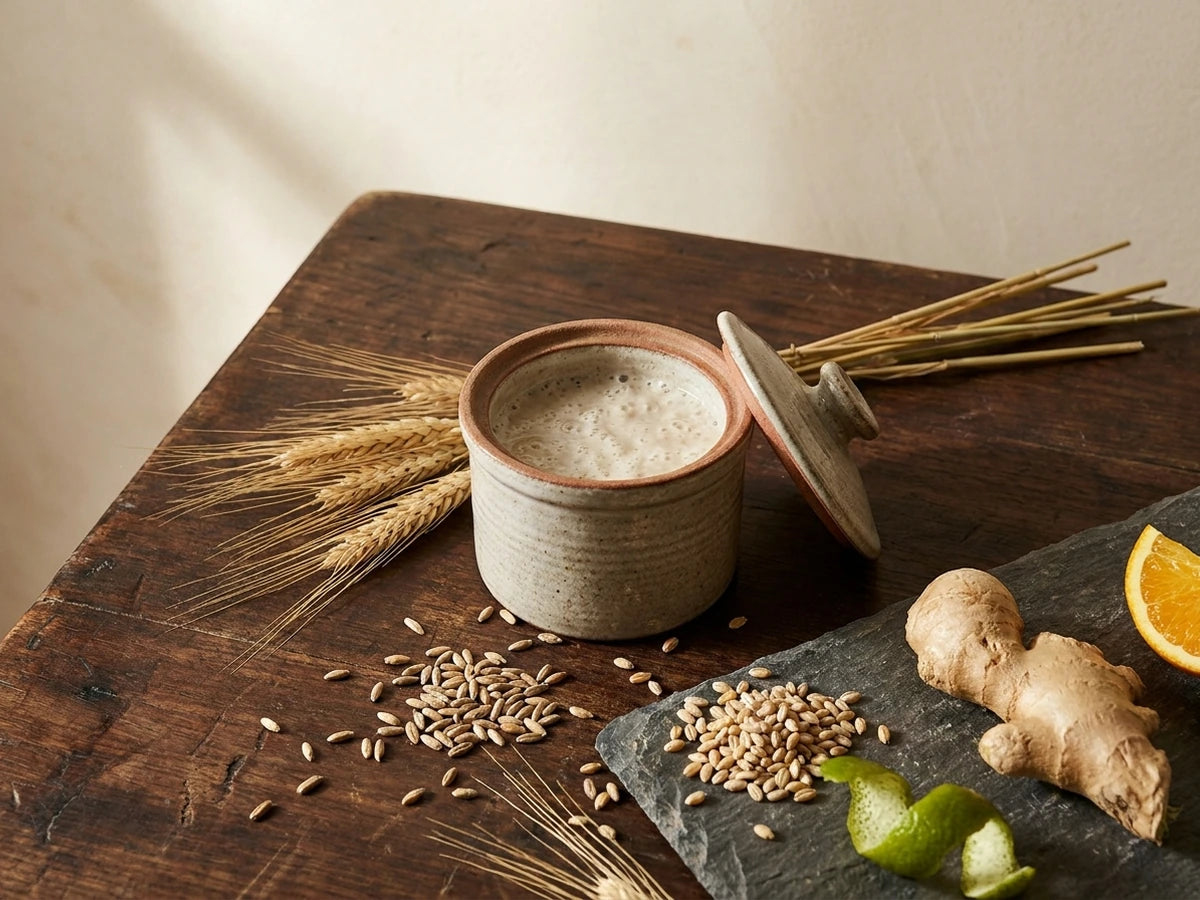
-
180 year old Sourdough starter
One living culture, fed and kept going ever since.
-
Over 100 Types of cultures
Cultures and yeasts living together in our starter.
-
Over 500 Billion live cultures
In every can, lab verified across batches.
-
Unfiltered, unpasteurised
So the cultures are still at work when you open the can.
What goes into the can.
The full ingredient list and typical nutrition values.
- High in fibre
- Low in sugar
- Suitable for vegans
- Made in Scotland
Ingredients
Original
Scottish water, rye, barley (gluten), chicory inulin fibre (2.3%), sugar, erythritol, sourdough cultures.
Ginger
Scottish water, rye, barley (gluten), ginger, chicory inulin fibre (2.3%), sugar, erythritol, ginger extract, sourdough cultures.
Mint & Lime
Scottish water, rye, barley (gluten), chicory inulin fibre (2.3%), sugar, erythritol, lime juice, mint, natural flavourings, sourdough cultures.
Allergens in bold
Nutrition
| Per 100ml | Original | Ginger | Mint & Lime |
|---|---|---|---|
| Energy | 77kJ / 18kcal | 79kJ / 19kcal | 79kJ / 19kcal |
| Carbohydrate | 4.8g | 4.9g | 4.9g |
| of which sugars | 2.4g | 2.5g | 2.5g |
| Fibre | 2.0g | 2.0g | 2.0g |
| Protein | 0.2g | 0.2g | 0.2g |
| Salt | 0.02g | 0.02g | 0.02g |
| Per 330ml can, about | |||
| Energy | 59kcal | 63kcal | 63kcal |
| Fibre | 6.7g | 6.7g | 6.7g |
LIVE Keep it cold
2–6°CLive Quas lives in the fridge.
Live Quas is unpasteurised, so its cultures stay active. The cold slows them down and keeps the flavour where it should be.
-
Chill it on arrival.
Unpack your box and put every can straight into the fridge. Live Quas must stay refrigerated at all times.
-
It keeps evolving.
The cultures stay active in the cold, so Quas slowly becomes more sour and less sweet with time.
-
Enjoy within six weeks.
Live Quas keeps for six weeks. Check the best-before date on the can.
 Google reviews
What people say after tasting Quas.
Order without the worry.
Delivery is on us, every box is covered on its way to you, and your first Taster 5 comes with our Money Back Guarantee.
-
Included with every box
Free Next-Day Delivery
Order by 4pm, Monday to Thursday, for next-day delivery. Shipping is included in the price, and every box travels by Royal Mail Tracked 24 or APC Overnight, with a tracking number.
- Order by 4pm, Monday to Thursday
- No delivery charge at checkout
- Tracked from our door to yours
-
Delivered as intended
Safe Arrival Guarantee
If cans arrive damaged or leaking, we'll give you credit or a discount on your next order, or send a free replacement, with a full refund as a fallback. Live Quas is also covered when delivery is delayed by 5 days or more.
- Damaged or leaking cans
- Send photos where reasonable
- Credit, discount or replacement first, then a full refund
-
The Third Sip Guarantee
Money Back Guarantee
We're confident you'll love at least one of our three flavours. That's why your first Taster 5 includes Original, Ginger and Mint & Lime, in any mix. If none of them is for you, email us within 7 days of delivery for a 100% refund, including delivery. No questions asked. It covers your account's first order, including the first box of a new subscription.
- Your first Taster 5, all three flavours
- None you love? Email us within 7 days
- 100% refund including delivery
Explore the other flavours.
Every flavour comes in boxes of 5, 12 or 24 cans.


Everything about the Mixed Pack.
Taste, ingredients, how it is made and how it compares, all in one place.
Ask us anythingAbout the flavour
What is the Mixed Pack?
The Mixed Pack puts Original, Ginger and Mint & Lime in one box, so you can taste the range side by side and find your favourite. Choose two flavours or all three, pick a Taster 5, a Half pack of 12 or a Full pack of 24, and we split the box between them using the mixes shown in the picker.
All three flavours are rye and barley fermented with our 180-year-old sourdough culture, which gives every can the same malty backbone and clean, dry finish. Original is that base on its own. Ginger adds freshly pressed ginger root. Mint & Lime starts with a spearmint tea base and finishes with a dash of fresh lime juice.
Original is malty and rich in dried fruit, with gentle spice and an ale-like body, and won a Great Taste award in 2024. Ginger brings a bold hit of fresh ginger over warm cereal depth, and won a Great Taste award in 2026. Mint & Lime is our bright, botanical seasonal flavour, zesty and herbal with a crisp finish.
If this is your first order, a Taster 5 with all three flavours comes with our Money Back Guarantee. If none of them is for you, email us within 7 days of delivery for a 100% refund, including delivery.
Every can is Live Quas: unfiltered and unpasteurised, with over 500 billion live cultures, high in fibre with 6.7g per can and low in sugar. Keep the whole box in the fridge at 2–6°C. Live Quas keeps for six weeks.
What is kvass?
Kvass is a traditional fermented drink made from rye and barley, drunk across Eastern Europe for around a thousand years. It is malty, lightly tangy and naturally sparkling. Quas is our sourdough fermented take on it, made in Edinburgh, Scotland.
Tasting notes and pairing
What does the Mixed Pack taste like, and what goes with it?
Taste them side by side. Chill all three cans and pour a small glass of each into stemless tulip glasses. Taste Original first to learn the base: malt, dried fruit and a dry, sour finish. Move to Mint & Lime next and notice how lime and spearmint lift the same grain. Finish with Ginger, because its warming heat lingers and would cover the others.
Which one is for you? If you like dark ale or rye bread, start with Original. If you like ginger beer but want it less sweet, go to Ginger. If you reach for a fresh, herbal aperitif, Mint & Lime is yours.
A dinner in three cans. Open with Mint & Lime alongside chargrilled prawns or a herb salad. Move to Original for the main course, perhaps roast pork with crackling, a slow-braised stew or dumplings with soured cream. Save Ginger for something fragrant and spiced, or pour it with sticky toffee pudding to finish.
How to serve. Fridge-cold and straight, with no ice. Original and Ginger need no garnish. Mint & Lime can take a single mint leaf or a lime twist if you like.
Found a favourite? Every flavour also comes in its own box of 5, 12 or 24 cans.
What does Quas taste like?
Malty and tangy, with a clean, dry finish. Original leans towards dried fruit and gentle spice, Ginger brings fresh ginger warmth, and Mint & Lime is bright and zesty.
Ingredients explained
What is in the Mixed Pack, and why?
Every can in the box starts from the same ingredients: Scottish water, rye, barley (gluten), chicory inulin fibre (2.3%), sugar, erythritol and sourdough cultures. Each flavour then adds its own.
- Original adds nothing more. It is the base on its own, with 2.4g of sugars per 100ml and about 59kcal per can.
- Ginger adds the pressed juice of 10g of raw ginger root per can. It has 2.5g of sugars per 100ml and about 63kcal per can.
- Mint & Lime starts with a spearmint tea base, finishes with a dash of lime juice after fermentation, and adds natural flavourings. It has 2.5g of sugars per 100ml and about 63kcal per can.
All three are high in fibre, with 6.7g per can, plant-based and suitable for vegans. All three contain gluten from rye and barley, so they are not suitable for people with coeliac disease or gluten sensitivity. None contains artificial flavourings, preservatives or acidity regulators.
Is kvass vegetarian/vegan?
Is Quas gluten-free?
How much sugar is in Quas?
Original has 2.4g of sugars per 100ml, and Ginger and Mint & Lime have 2.5g, so every flavour is low in sugar.
How it's made
How is Quas made?
Quas is a rye and barley sourdough fermentation. We ferment Scottish water, rye and barley with our 180-year-old sourdough starter, a living culture with a natural community of more than 100 types of cultures, yeasts and lactic acid cultures among them.
Working together, they make a complex fermentation. The yeasts give the gentle natural sparkle and the bready aroma, and the lactic acid cultures give the clean sourness. Ginger gets freshly pressed ginger, Mint & Lime starts with a spearmint tea base and a dash of lime juice, and everything is made in small batches in Edinburgh.
Quas is never filtered, and Live Quas is not pasteurised, so the cultures are still in the can when you open it.
Why does culture diversity matter in Quas?
A sourdough starter is a living mix of yeasts and lactic acid cultures, kept going by regular feeding with flour and water. Ours has been fed and kept going for around 180 years, and it holds over 100 types of cultures.
We never add single cultures or brewer's yeast, so the starter does all the fermenting. Different cultures make different acids and aromas: the yeasts give the gentle sparkle and the bready notes, and the lactic acid cultures give the clean sourness. That mixed community is why Quas tastes layered rather than simply sour.
How do we know how many live cultures there are in Quas?
We count them. Samples of Live Quas are diluted many times and spread onto plates of growth medium. Over a few days, each live culture grows into a visible colony, so counting the colonies and multiplying back up tells us how many were in the can. These are called colony forming units, or CFU.
Testing across batches finds over 500 billion live cultures in every 330ml can. The figure applies to Live Quas only, because it is unpasteurised. You can see how the counting is done on our science of kvass page.
Why is Quas not filtered or pasteurised?
Filtering removes cultures from a drink, and pasteurising inactivates them with heat. Both extend shelf life, which is why so many drinks go through one or the other.
We leave Live Quas unfiltered and unpasteurised because much of its character comes from the culture. The trade-off is a shorter shelf life and a drink that has to live in the fridge.
Is kvass a non-alcoholic beverage?
Storage and delivery
Why does Quas need to be always refrigerated?
Live Quas is unpasteurised, so its cultures are still active in the can. Cold slows them right down and keeps the flavour where it should be. Keep every can in the fridge at 2–6°C at all times, and unpack your box into the fridge as soon as it arrives. Our process is designed so Live Quas can travel unrefrigerated for the short next-day journey to you, but from the moment it arrives it needs the fridge.
What is the shelf-life of Quas?
Live Quas keeps for six weeks. Check the best-before date on the can. The cultures stay gently active even in the fridge, so the flavour slowly becomes more sour and less sweet with time. That is fermentation at work, not a fault.
How is Quas delivered?
Every box comes with Free Next-Day Delivery. Order Monday to Thursday by 4pm for next-day delivery. Shipping is included in the price, and every box travels by Royal Mail Tracked 24 or APC Overnight, with a tracking number.
If cans arrive damaged or leaking, our Safe Arrival Guarantee gives you credit or a discount on your next order, or a free replacement, with a full refund as a fallback. Live Quas is also covered when delivery is delayed by 5 days or more.
Can I mix flavours in one box?
Yes. Choose two or all three flavours in the picker above and we will split your box between them.
Kvass compared
How is kvass different from kombucha?
Kombucha is fermented from sweetened tea with a SCOBY, a culture in which acetic acid cultures are prominent. That is where its tart, vinegary edge comes from.
Quas is fermented from rye and barley with a sourdough culture dominated by lactic acid cultures. The result is malty and bready, with a clean, rounded sourness rather than a vinegar tang. If you find kombucha too sharp, Quas is a different lane: closer to a dark ale in body, and good with food.
How is kvass different from kefir?
Kefir and kvass are both fermented drinks with long histories in Eastern Europe, and both can contain live cultures. Milk kefir is made by fermenting milk with kefir grains, so it is dairy and can contain lactose. Water kefir uses sweetened water and its own grains.
Quas is made from rye and barley with a sourdough starter instead of kefir grains. It is plant-based and suitable for vegans, though it contains gluten. In flavour it is malty and dry rather than creamy or yoghurt-like, and our starter holds over 100 types of cultures.
What is the difference between kvass and beer/non-alcoholic beer?
Kvass and beer both start with fermented grain, and Quas shares beer's malty body and natural carbonation, so it sits comfortably beside a pint. The differences are in how they are made.
Most beer is brewed with hops and fermented with brewer's yeast, which turns sugars into alcohol. Alcohol-free beer is usually made the same way, then has the alcohol removed, or is fermented less. Quas has no hops. It is fermented with a sourdough culture of yeasts and lactic acid cultures, which gives it a tangy, bready character and a dry finish instead of hop bitterness. It is non-alcoholic, and Live Quas is unfiltered and unpasteurised, so the cultures are still in the can.
How is Quas different from kvass available in shops?
Kvass on shop shelves varies a lot by producer. Some is not fermented at all, just sweetened, flavoured and carbonated. Some is fermented with baker's yeast, then filtered or pasteurised so it keeps for months without a fridge.
Live Quas is fermented with a sourdough culture of over 100 types of cultures, then left unfiltered and unpasteurised, with over 500 billion live cultures in every can. It contains no preservatives or acidity regulators. That is why it lives in the fridge and keeps for six weeks. To compare sugar, check each drink's label per 100ml: Quas has 2.4g to 2.5g.